
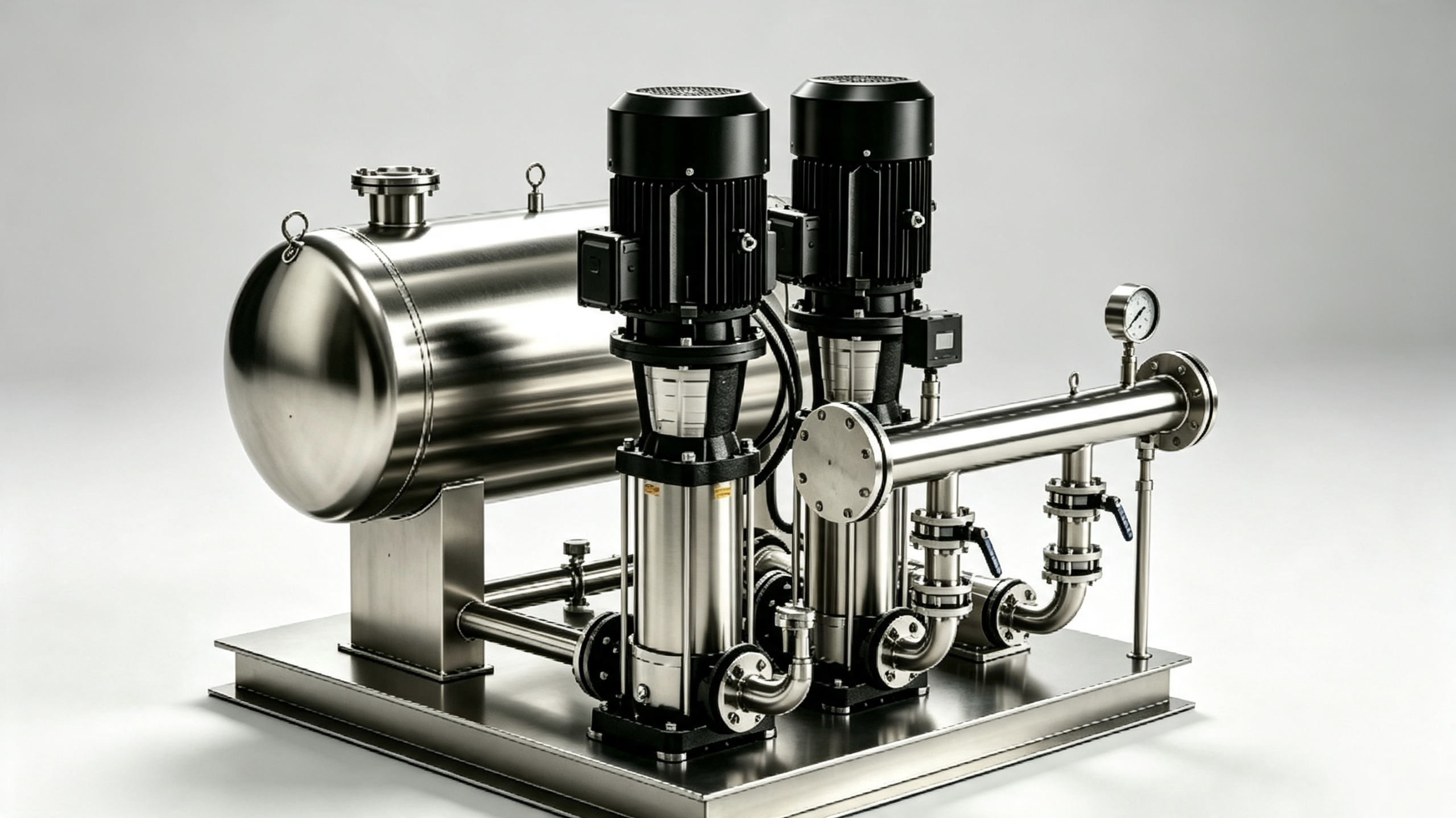

Tank-type negative pressure water supply unit
Description
Integrated unit equipped with buffer pressure tank, negative‑pressure suppressor, stainless‑steel multistage pumps, VFD control system, pipe valves and base frame. It superimposes pressure on existing municipal pipeline pressure without generating negative pressure to protect public water network. Built‑in buffer tank compensates peak water‑demand flow. No large‑size water tank required, saves space and prevents secondary water pollution. Suitable for building secondary water‑supply projects with stable municipal water supply. OEM & ODM available.
Key Features
‑ Negative‑pressure suppression device, prevents vacuum generation and protects municipal water pipeline
‑ Tank buffer structure compensates flow during peak consumption, avoids sharp pressure drop of public network
‑ Superimposed pressure water supply, makes full use of original municipal pressure for remarkable energy saving
‑ SS304 / SS316 wetted components, avoid secondary water pollution
‑ PLC closed‑loop VFD control, multi‑pump alternate operation, stable water pressure, complete protection functions
‑ Fully pre‑assembled unit, only pipe connection required on‑site
‑ Small footprint compared with conventional tank‑type frequency‑conversion sets, reduces civil‑work investment
‑ Optional touch‑screen, remote monitoring, fault alarm and water‑shortage protection
Technical Data Range
‑ Unit flow rate: 5‑260 m³/h
‑ Supply head: 15‑200 m
‑ Working pressure: 0.3‑2.0 MPa
‑ Pump quantity: 1‑5 units (2‑3 units typical)
‑ Buffer tank volume: 0.6‑5 m³
‑ Power supply: 380‑400V 50Hz three‑phase, 60Hz customizable
‑ Wetted material: SS304 standard, SS316 optional
‑ Control mode: PLC + VFD cabinet, pressure closed‑loop control
‑ Optional accessories: touch screen, remote monitoring module, sterilization device
‑ Medium: Municipal tap water, drinking‑water, clean fresh water
Applications
‑ Secondary water supply for high‑rise residential communities
‑ Water‑supply systems for hotels, office buildings and commercial complexes
‑ Factory & industrial park water supply directly connected to municipal network
‑ Public buildings such as hospitals and schools
‑ Old community pump‑house renovation (sufficient municipal inlet pressure)
‑ Secondary‑supply pump‑houses for new urban construction projects